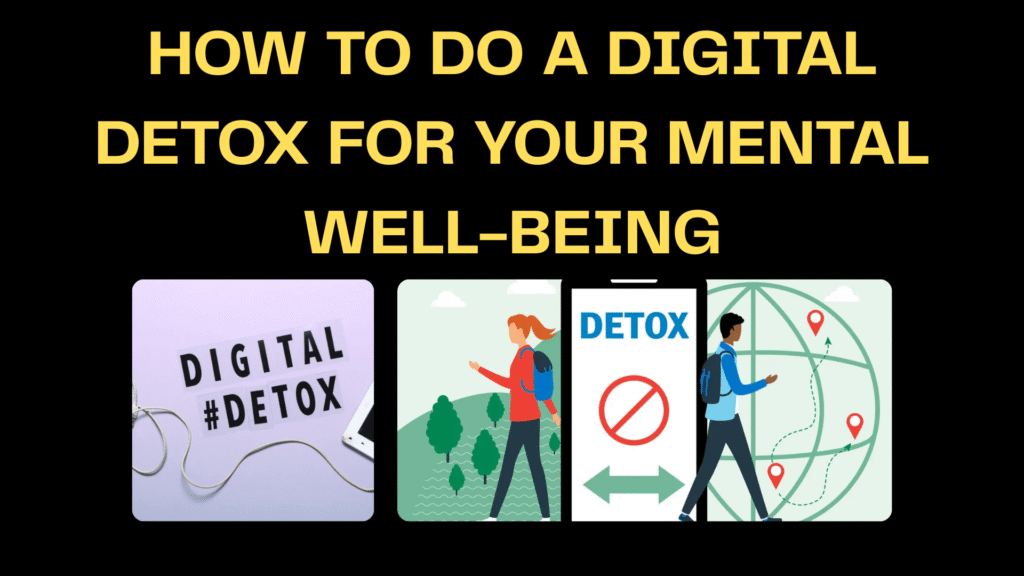
In today’s world, people spend hours on phones, computers, and social media. While technology makes life easier, too much screen time can affect mental health. A digital detox, or taking a break from digital devices, can help reduce stress and improve well-being.
Why Digital Detox is Important
Constant notifications, endless scrolling, and online comparisons can cause anxiety, poor sleep, and lack of focus. Taking time away from screens allows your mind to rest and recharge. It also helps you reconnect with the real world and the people around you.
Set Clear Goals
A digital detox does not mean quitting technology forever. Instead, it is about using it in a healthy way. Start by setting small goals, like avoiding your phone before bed or taking one day a week without social media.
Replace Screen Time with Healthy Activities
Instead of scrolling, use your time for activities that bring peace and joy. Reading a book, exercising, cooking, or spending time outdoors can boost your mood and help you feel more present.
Create Tech-Free Zones
Make certain areas, like your dining table or bedroom, free from devices. This encourages real conversations with family and friends, while also improving sleep quality.
Practice Mindful Use of Technology
After your detox, focus on balanced use of technology. Turn off unnecessary notifications, limit screen time with apps, and use digital tools only when they truly help.
Conclusion
A digital detox is not about avoiding technology completely, but about creating balance. By setting limits, replacing screen time with positive habits, and using devices mindfully, you can improve your mental well-being and enjoy a healthier relationship with technology.